Diversifying Cobalt Supply: Why Commercially Viable Alternatives Matter
By Karolina Chmielewska, Policy and Communications Officer, Cobalt Institute
Diversifying Cobalt Supply Key highlights:
- Cobalt dependencies reflect the structure of global supply chains. The geographical concentration of mining and refining, combined with the technical requirements of different cobalt products, means that diversification cannot be achieved simply by changing suppliers.
- Trade measures must deliver genuine improvements in resilience. Tariffs and sourcing requirements should be assessed against their wider impacts on supply availability, prices and European competitiveness, rather than simply redirecting existing trade flows.
- Commercially viable alternatives require investment. Expanding mining, processing, refining and recycling capacity depends on access to finance, feedstock and reliable demand, alongside policies that enable investment.
- Regulatory coherence and proportionate implementation are essential. New measures should complement existing EU legislation and reflect the practical challenges and timelines involved in developing alternative supply chains.
Europe is looking to reduce its dependencies on critical raw materials. For cobalt, achieving greater supply chain resilience will require more than changing where companies source their materials.
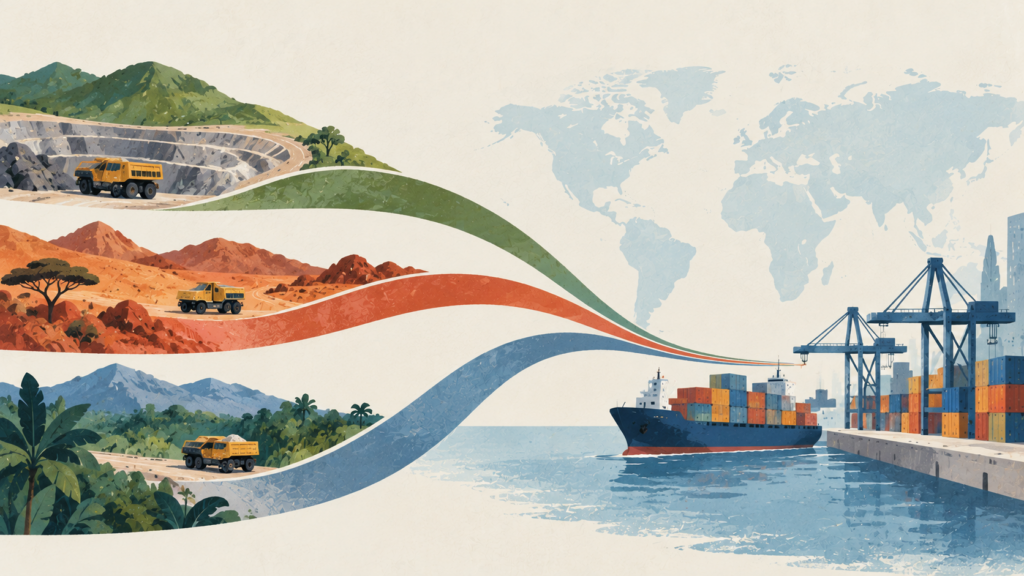
Cobalt supply chains are geographically concentrated and internationally interconnected. In 2025, the Democratic Republic of the Congo (DRC) accounted for 73% of global mined cobalt production, while China accounted for 79% of refined output[1]. The DRC also holds approximately half of global cobalt reserves, highlighting a geological concentration that sourcing requirements alone cannot change[2].
These dependencies occur at different stages of the value chain. Cobalt mined in one country may be processed and refined elsewhere before reaching European manufacturers. Different products, including battery-grade cobalt sulphate, refined metal and specialised cobalt compounds, must also meet specific technical and customer requirements. Access to another supplier does not necessarily mean suitable alternative material is available.
The Commission's proposed DiversifyEU Instrument therefore needs to account for the commercial realities of the cobalt market. Existing supply chains have developed around product quality, reliability and competitiveness. Requiring businesses to change established sourcing arrangements before viable alternatives exist could increase costs, disrupt production and weaken the resilience such measures seek to improve.
Diversification needs to be made commercially possible before it can be required.
Developing alternative supply chains requires investment in mining, processing, refining and recycling capacity, supported by infrastructure, financing, access to feedstock and dependable demand. Removing unnecessary investment barriers and supporting viable projects are essential alongside any new sourcing requirements.
Diversification must consider the wider strategic implications for Europe's relationships with mineral-producing countries. Given the geological concentration of cobalt, established partnerships, particularly with the DRC, will remain important. Measures should avoid inadvertently undermining investment, market access and opportunities for local value addition in producer countries.
Recycling offers another important source of cobalt supply resilience, but its contribution depends on an integrated value chain. European recycling and refining capacity must be connected to downstream demand, including cathode material, battery and EV manufacturing. Without reliable local offtake, additional recycling capacity may struggle to become commercially viable.
Regulatory coherence will be equally important. New diversification measures should complement existing EU legislation, including the Critical Raw Materials Act, while avoiding additional burdens that could discourage investment in European cobalt production and recycling.
The effectiveness of DiversifyEU should be measured by whether it improves access to reliable, technically qualified and commercially viable cobalt supplies, rather than simply redirecting existing trade flows.
Read the Cobalt Institute's full submission for our detailed recommendations.
[1] Cobalt Institute, Cobalt Market Report 2025, May 2026.
[2] U.S. Geological Survey, Mineral Commodity Summaries 2026: Cobalt.