Five key takeaways from the Cobalt Learning Group London workshop
By Susannah McLaren, Head of Responsible Sourcing and Sustainability, Cobalt Institute
02/11/2026
How can companies navigate evolving requirements while keeping due diligence focused on addressing risks to people? This question ran through the Cobalt Learning Group (CLG) workshop in London in October.
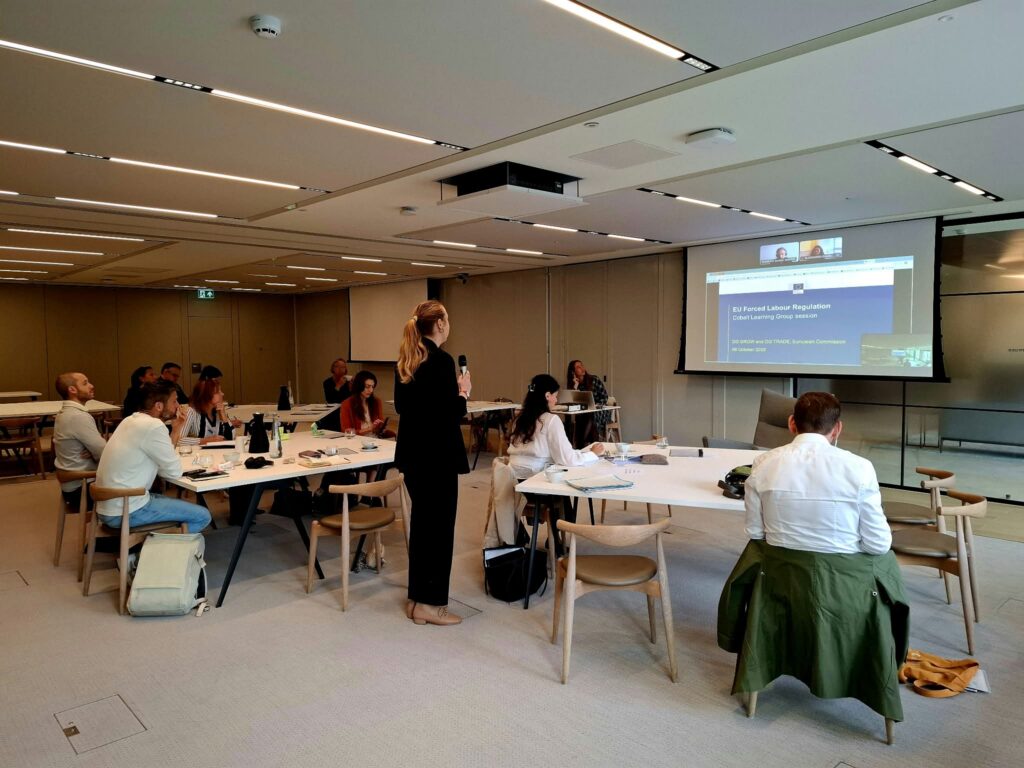
Moderated by Human Level, the workshop combined peer exchanges, expert briefings and practical exercises covering the EU Battery Regulation, developments in China’s supply chain regulatory framework, forced labour requirements, and the use of AI in human rights due diligence.
The workshop took place under the Chatham House Rule.
Five key takeaways emerged:
- Traceability and due diligence have distinct, complementary roles
Understanding where material comes from informs risk assessment. Effective human rights due diligence also requires companies to identify and prioritise impacts, take action and assess whether their response works. The discussions highlighted how growing traceability demands, driven by geopolitical concerns and emerging legislation, are diverting time and resources away from other important aspects of human rights due diligence. Alongside requesting traceability information, customers should ask suppliers how they identify human rights risks, what they are doing to address them and how they check whether conditions are improving. These discussions can help direct resources towards preventing and addressing harm.
- Better upstream-downstream dialogue can make implementation more effective
The discussions highlighted the burden of repeated self-assessment questionnaires (SAQs) and extensive information requests, often accompanied by limited feedback on how customers use the answers. More direct exchanges between suppliers and customers could clarify what evidence is needed and why, address commercial confidentiality and reduce duplication. Questions around mass balance, disclosure expectations and responsibilities for stakeholder engagement remain priorities for further dialogue. Engagement with affected communities also needs careful coordination, taking account of existing relationships and engagement processes to avoid duplication and unintended harm.
- Navigating requirements across jurisdictions calls for preparation and cooperation
Differing legal requirements can affect information sharing and access to assurance across international supply chains. Companies can prepare by understanding their dependencies on particular assessments, identifying alternative sources of credible evidence and agreeing in advance how legal, procurement and human rights teams would resolve difficult cases. Evidence from different systems could support due diligence across jurisdictions, provided its credibility, coverage and gaps are assessed. Maintaining a focus on the most severe risks to people remains central as companies adapt their approaches.
- Forced labour preparedness starts with access to reliable evidence
Despite differences between the EU and US approaches, understanding material flows and securing access to supporting records are important foundations for preparedness. Companies should establish access to evidence before an investigation or detention occurs, including through contracts and purchase orders. Mapping associated payments and using the ILO forced labour indicators to inform assessments can further strengthen this work. Cooperation within companies and across supply chains is essential to ensure that relevant records are available when needed.
- AI can strengthen due diligence when human expertise guides its use
AI offers opportunities to support supplier screening, document review and monitoring. Its effectiveness depends on the quality of the underlying information, with incomplete or fabricated data, language bias and data security requiring careful controls. Verification, clear accountability and a record of decisions remain essential. AI can help direct resources towards complex issues, while expert interpretation and meaningful engagement with workers and communities continue to depend on people.
These takeaways will inform further CLG discussions, including on traceability and evidence expectations, interoperability and closer upstream–downstream engagement through the Cobalt Downstream Engagement Group.
Now in its fifth year, the Cobalt Learning Group is a peer-learning forum open to Cobalt Institute members, providing a space to exchange experience and explore practical approaches to environmental and human rights due diligence in cobalt value chains.
Thank you to all participants and expert contributors, to Glencore for hosting at its London offices, and to Human Level for facilitating the workshop.